Duck Breast with Fig and Red Wine
Highlighted under: World Flavor Essentials
I absolutely love cooking duck, and this Duck Breast with Fig and Red Wine recipe is one of my favorites. The rich flavors of the succulent duck combined with the sweetness of figs and the depth of red wine create a dish that's sure to impress. I appreciate how simple it is to prepare yet so elegant, making it perfect for dinner parties or a cozy night in. Plus, the aroma that fills the kitchen while it cooks is simply irresistible – this dish will have everyone asking for seconds!
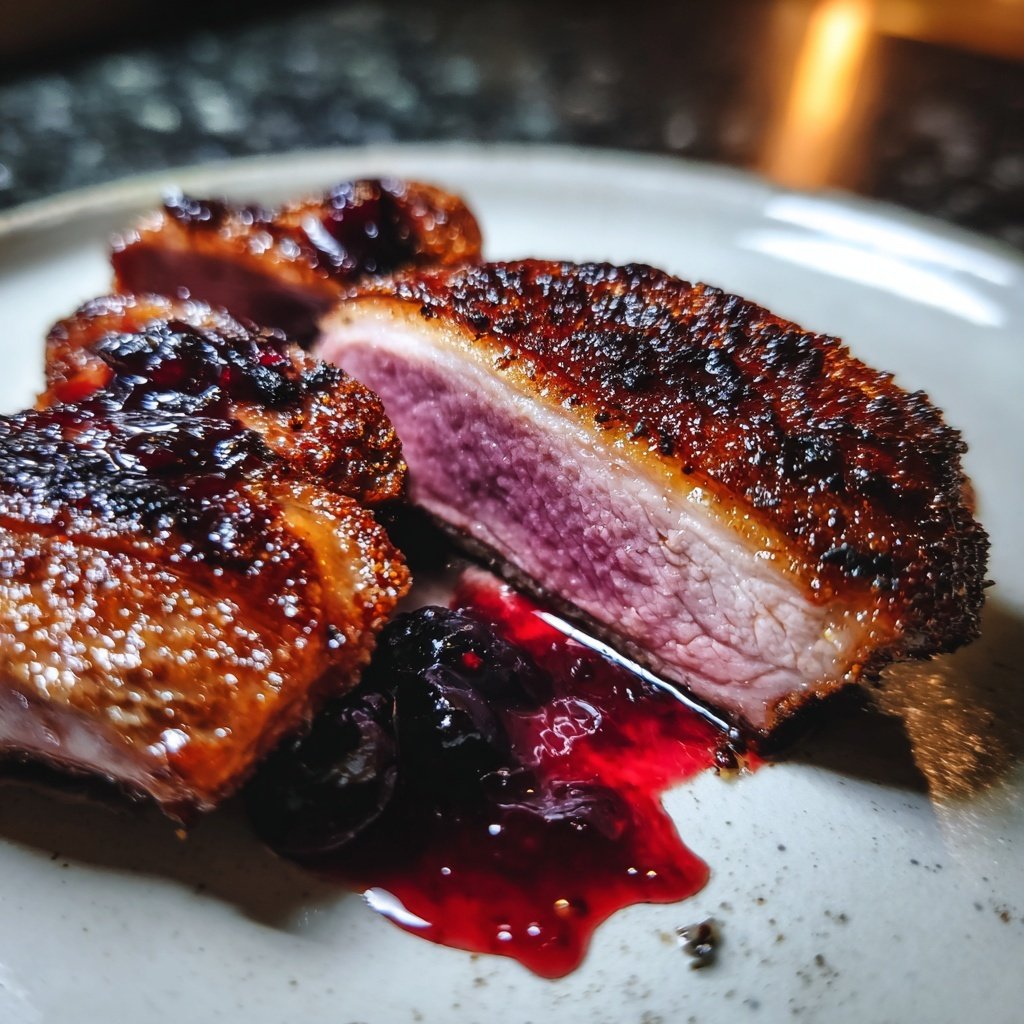
When I first attempted this dish, I was surprised by how well the figs complemented the rich flavor of duck. The combination was unexpected yet delightful, making it a go-to for special occasions. I suggest using fresh figs if they are in season, as their vibrant sweetness elevates the dish significantly.
Furthermore, searing the duck skin to achieve that crispy texture is key. I learned that starting on medium heat allows the fat to render slowly, resulting in a perfectly crisp finish. Don’t rush the process – the results are worth it!
Why You'll Love This Recipe
- The perfect balance of sweet and savory flavors
- Crispy, golden duck skin paired with a luscious sauce
- A restaurant-quality dish you can easily make at home
Understanding Duck Breasts
Duck breasts are renowned for their rich flavor and tender texture, setting them apart from other poultry. When selecting duck breasts, look for those with a good layer of fat under the skin, which enhances the dish's richness when rendered. I recommend buying high-quality duck, preferably from a trusted source. The skin crispy provides a delicious contrast to the succulent meat, making it a key element of this dish.
The cooking process begins with rendering the duck fat, which is crucial for achieving that coveted crispy skin. Starting in a cold skillet allows the fat to slowly melt, preventing the skin from burning and ensuring a uniform texture. Maintaining a medium heat throughout the cooking process will help you achieve a beautiful golden-brown finish without compromising the juiciness of the meat.
Perfecting the Sauce
The fig and red wine sauce is a highlight of this dish, beautifully complementing the rich duck. Fresh figs add a natural sweetness and a pleasing texture, while the red wine contributes depth and acidity. Make sure to use a good-quality red wine that you would enjoy drinking; this will translate into a better sauce. I prefer a medium-bodied Merlot or Pinot Noir, as they provide just the right balance without overpowering the figs.
Simmering the sauce until it thickens slightly allows the flavors to meld, creating a luscious coating for the duck. Aim for a sauce consistency that lightly coats the back of a spoon, which typically takes about five minutes of simmering. Always taste as you go to adjust sweetness or acidity; a pinch of salt can elevate the overall flavor and bring the sauce to life.
Ingredients
Gather these fresh ingredients for a delicious meal:
Ingredients
- 2 duck breasts
- 1 cup fresh figs, halved
- 1 cup red wine
- 1 tablespoon honey
- 1 tablespoon balsamic vinegar
- Salt and pepper to taste
- Fresh thyme for garnish
Make sure to prep your ingredients before starting to cook to ensure a smooth process.
Instructions
Follow these steps for a succulent duck dish:
Sear the Duck
Score the skin of the duck breasts in a crisscross pattern, ensuring not to cut into the meat. Season with salt and pepper. Place the duck, skin-side down, in a cold skillet. Turn the heat to medium and cook for about 6–8 minutes, allowing the fat to render and the skin to crisp up. Flip and cook for an additional 3–4 minutes. Remove and let rest.
Make the Sauce
In the same skillet, remove excess fat, leaving about 1 tablespoon. Add the red wine, honey, and balsamic vinegar. Bring to a simmer and scrape up any brown bits from the bottom of the pan. Stir in the figs and simmer until slightly thickened, about 5 minutes.
Serve
Slice the duck breast thinly and arrange it on a plate. Drizzle the fig and red wine sauce over the top and garnish with fresh thyme. Serve immediately.
Your Duck Breast with Fig and Red Wine is ready to serve. Enjoy!
Pro Tips
- Remember to let the duck rest after cooking
- it will help keep the meat juicy. Pair this dish with a robust red wine for an elevated dining experience.
Serving Suggestions
When it comes to plating duck breast, presentation is key. I like to slice the duck against the grain, which ensures each bite is fork-tender. Arrange the thin slices neatly and drizzle the warm fig and red wine sauce over the top for a stunning contrast. Adding a sprinkle of fresh thyme creates an inviting aesthetic while enhancing the dish's fragrance.
This dish pairs beautifully with a side of creamy polenta or roasted vegetables, providing a hearty balance to the rich duck. A crisp green salad with a light vinaigrette also complements the meal by adding freshness and acidity to cut through the richness. Feeling adventurous? Experiment with sides like wild rice or a fruit compote for an unexpected twist.
Make-Ahead and Storage Tips
If you're planning to entertain, you can prepare the components ahead of time. The duck breasts can be seasoned and the sauce can be made a day in advance, allowing the flavors to deepen. To reheat, simply warm the sauce over low heat while the sliced duck can be gently warmed in a skillet to retain its crispy skin. Just be careful not to overcook it as this can dry out the meat.
As for leftovers, store the sliced duck and sauce separately in airtight containers. The duck can last in the fridge for up to three days, while the sauce remains good for about a week. For freezing, keep the components separate, ensuring they are tightly wrapped. Duck breast can be frozen for up to three months, but will remain best if consumed within one month for optimal texture.
Ingredient Substitutions
If figs are out of season or unavailable, dried figs can create a similar flavor profile in the sauce; just soak them in warm water or red wine for 30 minutes before adding them to the sauce. Alternatively, fresh blackberries or cherries also work well and provide a delightful tartness that will elevate the dish.
For a healthier version, you can substitute duck breast with skin-on chicken thighs. They’ll still provide richness, but adjust cooking times accordingly—chicken typically requires about 5-7 minutes per side. Remember to monitor the internal temperature with a meat thermometer, ensuring it reaches 165°F (74°C) for safe consumption.
Questions About Recipes
→ Can I use frozen duck breasts?
Yes, but make sure to thaw completely in the refrigerator before cooking.
→ What can I substitute for figs?
Dried figs or prunes can be used, but they will provide a different texture.
→ How do I know when the duck is done?
Cooked duck breast should have an internal temperature of 135°F for medium-rare.
→ Can I make this dish ahead of time?
It's best to cook the duck fresh, but the sauce can be made ahead and reheated.
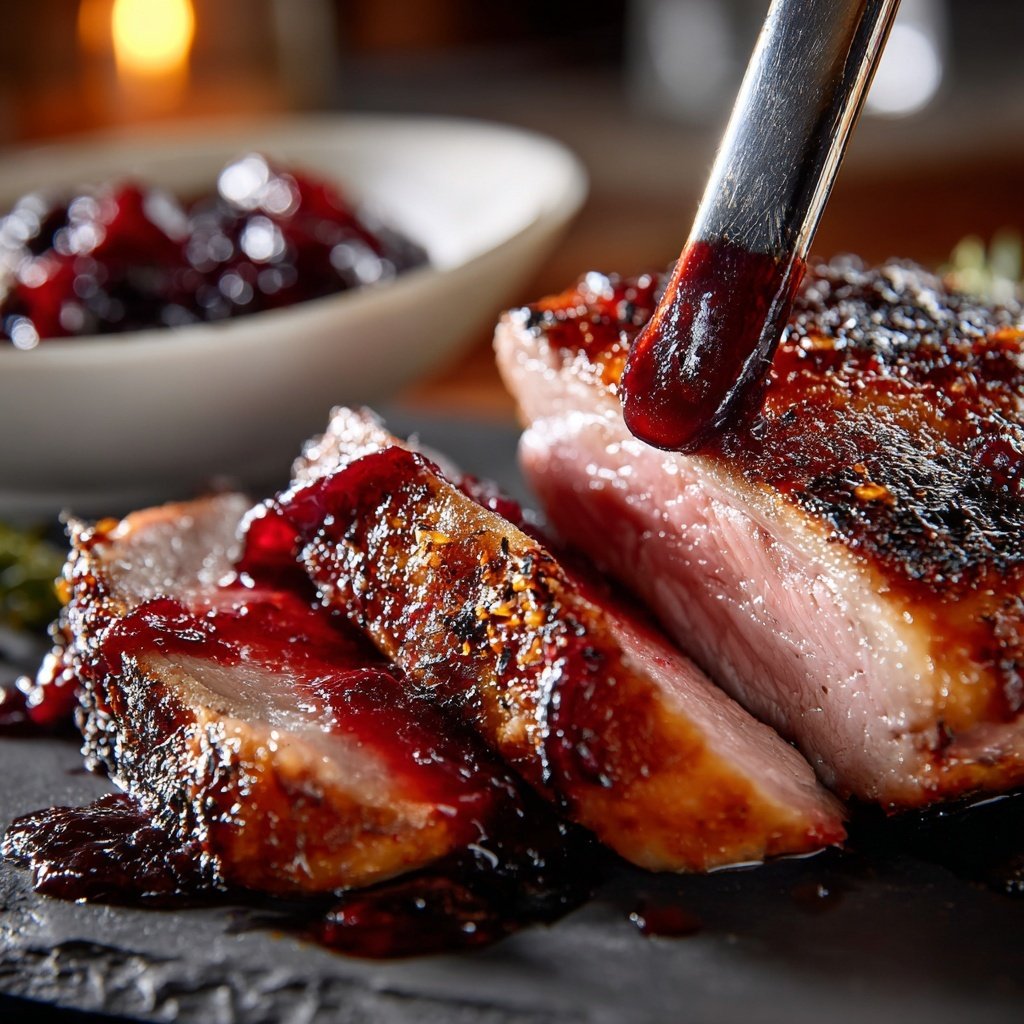
Duck Breast with Fig and Red Wine
Created by: Lydia Barrett
Recipe Type: World Flavor Essentials
Skill Level: Intermediate
Final Quantity: Serves 2
What You'll Need
Ingredients
- 2 duck breasts
- 1 cup fresh figs, halved
- 1 cup red wine
- 1 tablespoon honey
- 1 tablespoon balsamic vinegar
- Salt and pepper to taste
- Fresh thyme for garnish
How-To Steps
Score the skin of the duck breasts in a crisscross pattern, ensuring not to cut into the meat. Season with salt and pepper. Place the duck, skin-side down, in a cold skillet. Turn the heat to medium and cook for about 6–8 minutes, allowing the fat to render and the skin to crisp up. Flip and cook for an additional 3–4 minutes. Remove and let rest.
In the same skillet, remove excess fat, leaving about 1 tablespoon. Add the red wine, honey, and balsamic vinegar. Bring to a simmer and scrape up any brown bits from the bottom of the pan. Stir in the figs and simmer until slightly thickened, about 5 minutes.
Slice the duck breast thinly and arrange it on a plate. Drizzle the fig and red wine sauce over the top and garnish with fresh thyme. Serve immediately.
Extra Tips
- Remember to let the duck rest after cooking
- it will help keep the meat juicy. Pair this dish with a robust red wine for an elevated dining experience.
Nutritional Breakdown (Per Serving)
- Calories: 480 kcal
- Total Fat: 32g
- Saturated Fat: 10g
- Cholesterol: 95mg
- Sodium: 120mg
- Total Carbohydrates: 18g
- Dietary Fiber: 2g
- Sugars: 12g
- Protein: 30g